Case Study
BioPrecision
They shipped a first version, found real traction, and watched their dataset grow by the week. I'm helping them turn that into a clearer V2, and a clear picture of what the product becomes as it grows.
bioprecision.com (opens in a new tab) Morgantown, WV In progress
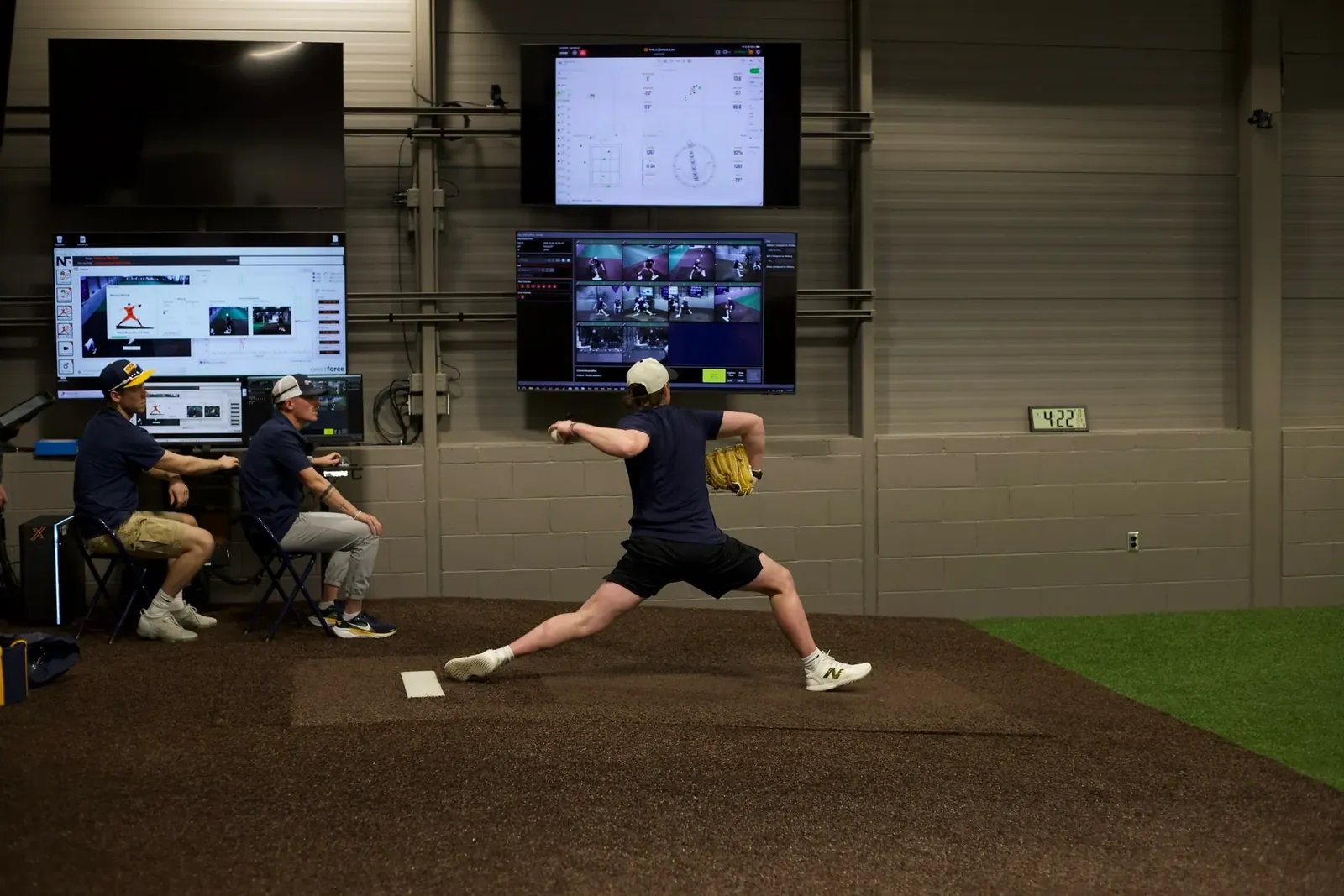

Discover
Learning who BioPrecision is and who they serve, then shipping a clearer, normalized V2 to build on.
- Digital Strategy
- UX Research
- Service Design
- Product Design
- Rapid Prototyping
Where they were starting
BioPrecision moved fast, the way good startups do. They shipped a first version, found real traction, and watched their dataset grow by the week. That growth is a good problem to have. It also means the experience has to keep up, so the people relying on it can keep up too.
Their first site is where I started. It said a great deal, across long pages of detail, though it was hard to tell what mattered most or what a visitor should do next. It had little to say about the people it was for.
They came to me with two needs at once: a clearer experience than the first build, and a clearer picture of what the product becomes as it grows. One helps right now. The other keeps the times ahead from getting harder than it needs to be.

Starting by listening
Early work like this is mostly about understanding. Before changing anything, I watch how people move through the product and how they think about what they're trying to get done. At this stage, everything I learn is worth weighing.
BioPrecision came in with good questions of their own, like:
- How many people go straight to the services they offer
- How many of those follow through and buy, over time
- When someone leaves before finishing, whether there's any sign of why
Turning hunches into testable ideas
To answer questions like those, I walk the team through a set of interview questions and worksheets, the same kind I share in the Guides here on the site. The point is to turn hunches into clear ideas we can check, instead of guessing.
The first site told me who BioPrecision is, but little about the people it serves. The worksheets and conversations did that part, building a fuller picture of what athletes, parents, and coaches need than the page alone could show.
Each one becomes a small hypothesis: something specific we expect to be true, written plainly enough that we can put it to the test.

How the work is taking shape
Discovery runs in stages, each one a focused step with its own question to answer. Worked in order, they keep the early decisions honest, and they pointed toward a clearer position for BioPrecision and a short list of what mattered most for V2. The path looked like this:
- Agreeing the goals, the scope, and what success looks like, before any design starts.
- Taking stock of everything they offer, so we can see where the real value sits.
- Holding those offerings up against what their athletes need, and naming the gap to close first.
- Settling on one clear measure of success, with the smaller signals beneath it, so progress is something we can point to later.
- Reading the wider landscape, to find where BioPrecision can stand out now and what to build toward.
- Deciding what comes first and what can wait, so the early effort lands where it counts.
Three directions, one strategy
The position was settled, so the question became how it should feel. I drew the same strategy three ways, each leading with a different person it has to win.
We shipped Athletic Momentum. It leads with the athlete's drive while still carrying the credibility and the parents' trust the other two put first.
- Clinical Precision led with the science, for the evidence-minded buyer.
- Athletic Momentum led with the athlete's next level. (selected)
- Collegiate Trust led with recruiting and trust, for parents and the college path.
A baseline to build on
A couple of early meetings and a careful look at the current site gave me a real sense of who BioPrecision is. They have a strong identity already, which makes the design easier to ground and easier to trust.
From there, I built a steady baseline to work from. It draws on well-established design and usability guidelines, the same references I keep on my Resources page, so the foundation is sound before we start trying ideas on top of it.
With that baseline in place, V2 is something solid to test against. We can see what genuinely moves things toward the outcomes BioPrecision wants, and what falls flat, with real footing under the comparison.
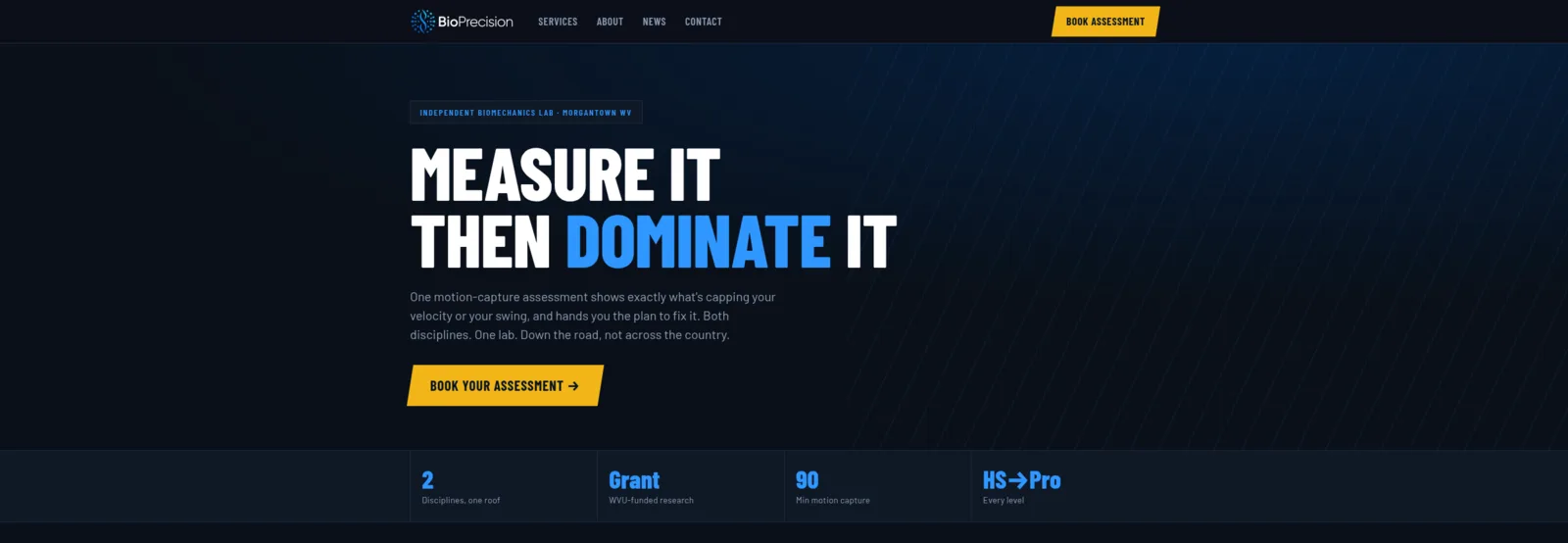
What we're watching this iteration
V2 is live, so the work now is measuring it. There are no results to report yet. This iteration is about putting the measurement in place and setting a baseline, since most of it went untracked before.
Behind each question is a small theory the design is built on, like the idea that one clear next step moves more people to act than a long list of services did. These are the questions that will tell us whether the theories hold:
- Can a first-time visitor tell what BioPrecision is, and what to do next, within a few seconds?
- How many people who land start a booking, and where do they pause or leave?
- Do parents and athletes look for proof, and do they find it before they decide?
- Do lower-commitment visitors take a smaller first step, a tune-up or a camp, before the full assessment?
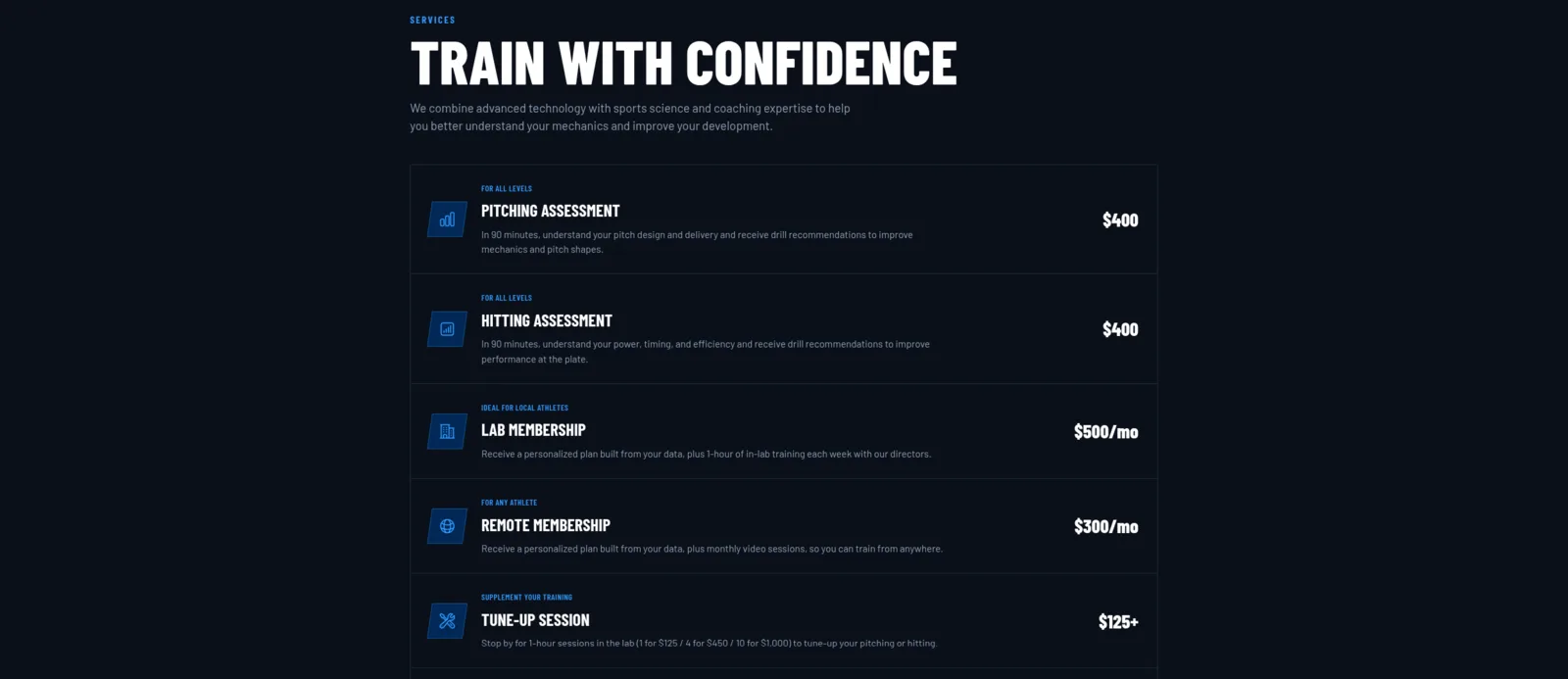
Define
Defining the long-term application: its integrations and the operational points of contact across the business.
- Digital Strategy
- Service Design
- Implementation
Defining the long-term application
With a steady V2 in place, the next work is bigger than a website. It's the application BioPrecision grows into: how the assessment data flows, what connects to what, and every point where the business and an athlete meet.
This phase is in progress. As it firms up, the log here fills in.